
Less Soreness Does Not Answer Every Readiness Question

Soreness is useful information about how an athlete feels. Readiness for a particular demand may also involve task performance, the training context and, after injury, clinical assessment. A lower soreness score should not be treated as an automatic clearance decision.
Feeling better is worth noticing. The next question is what that change tells you about the activity ahead.
Keep the measure attached to its question
A report of soreness describes an experience. A strength test measures performance under defined conditions. A sleep report provides another kind of information.
These observations can complement one another without becoming one interchangeable recovery score. If a product claims to improve a particular outcome, ask whether that was the outcome the research actually measured.
The systematic review by Saw and colleagues found that subjective wellbeing measures can be informative when monitoring the training response. That supports listening to the athlete's report. It does not turn a single response into a universal rule for the next session.
Define readiness for the actual task
Readiness for an easy practice and readiness for a demanding competition are different questions. After injury, the relevant criteria should be discussed with the treating team.
Ask which activity is being considered and what information matters for that decision. A general statement that someone is “recovered” can hide the task that remains difficult.
This is also why social-media comparisons are unhelpful. Another athlete's report rarely includes the same starting point, demands or support.

Use a short observation record
Record the observation in ordinary language, its timing and the activity it affects. Follow any monitoring approach provided by the coach or clinician.
For example, an athlete might report less general soreness while finding a familiar training task unusually difficult. The useful conversation preserves both observations rather than choosing the one that makes the story simpler.
Do not create a personal clearance rule from a percentage improvement in a self-reported score. The number needs to be interpreted in the relevant training or clinical context.
Be precise about equipment benefits
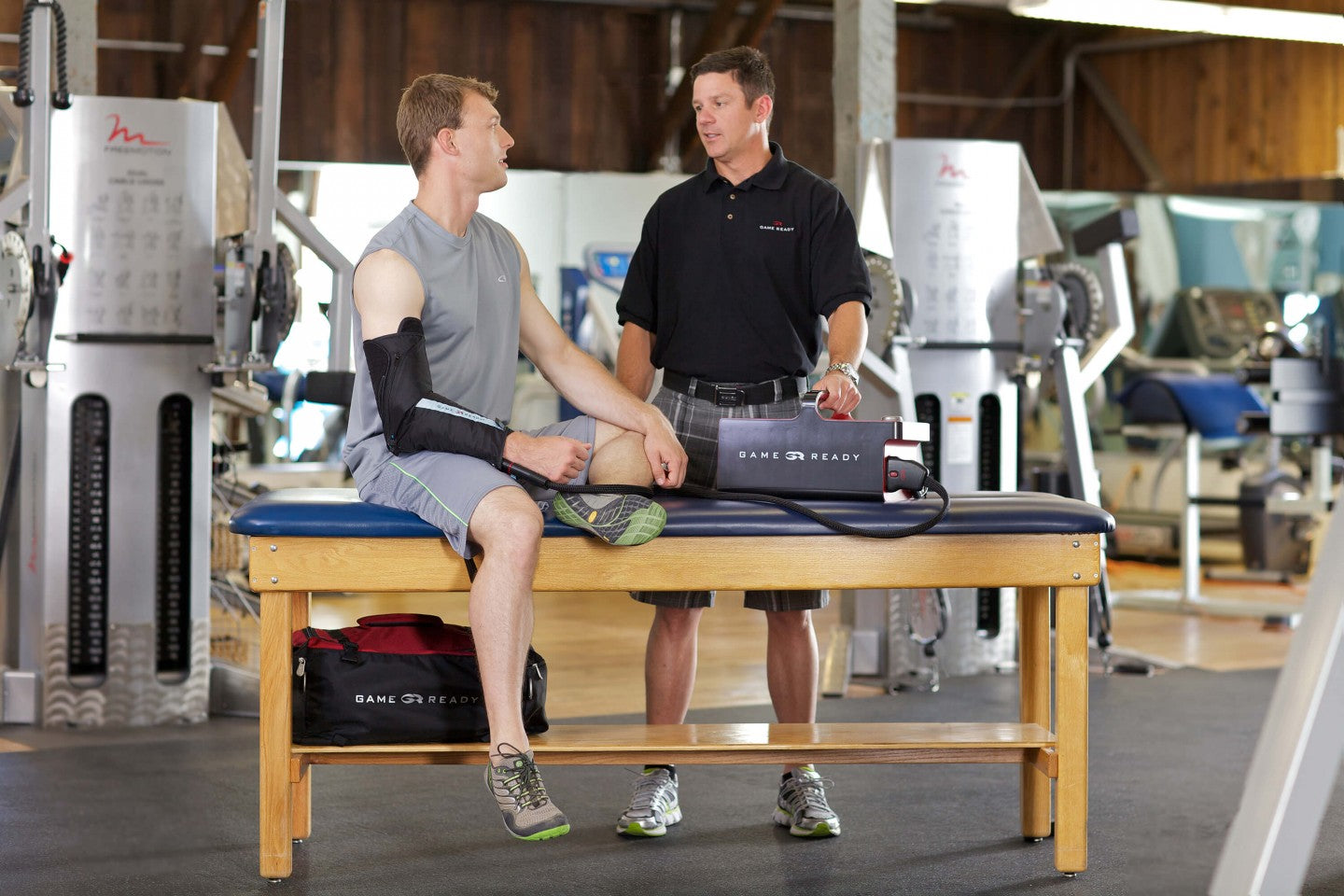
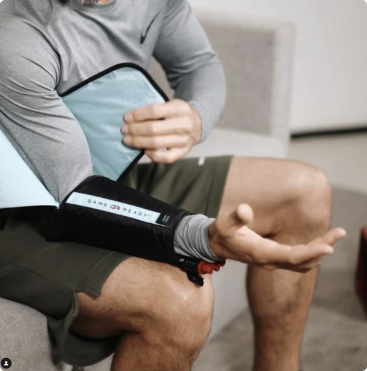
If a recovery session is associated with greater comfort, describe that experience accurately. Whether it has improved next-session performance is another question.
The distinction protects useful benefits from being overstated. A person can reasonably value a comfortable routine while recognising that it does not establish readiness for every demand.
For an equipment comparison, ask what changed, how it was assessed and when. A result measured immediately after a session may not answer a question about performance the following day.
Make monitoring lead to a conversation
Before collecting another metric, decide who will help interpret it. Ask what kind of change should be discussed and what context to bring.
For a coach, a short report may help identify a question about the training week. For a clinician, it may add context to a rehabilitation assessment. For the athlete, it can make the experience easier to explain.
Monitoring is most useful when it helps a person ask a better question. The aim is to understand the next decision, rather than turn every feeling into a score that promises to make the decision on its own.