How a Clinic Should Compare Recovery Equipment Proposals

A clinic can compare recovery equipment more fairly by putting competing options into the same patient workflow. The purchase decision should account for the intended clinical use, evidence, staff tasks, operating costs and a realistic alternative.
Comparing feature lists alone gives every supplier a different version of the question.
Start with one intended use
Define who the equipment is for and where it will be used. A shared clinic device, a team recovery station and a product supplied for home use introduce different demands.
For an illustrative clinic considering a cold-therapy system, the first questions concern the intended patients, appropriate clinical role and setting. Only then does it make sense to compare controls, wraps, preparation and support.
Keep the use case narrow enough that staff can picture the work. A promise to “improve recovery” is difficult to test. A proposal explaining how a device would be fitted, used and prepared for the next appropriate patient can be examined in detail.
Ask every supplier the same questions
Request the exact model and configuration, required accessories, intended use, current operating information and evidence for the proposed benefit. Have the treating professionals assess the clinical fit.
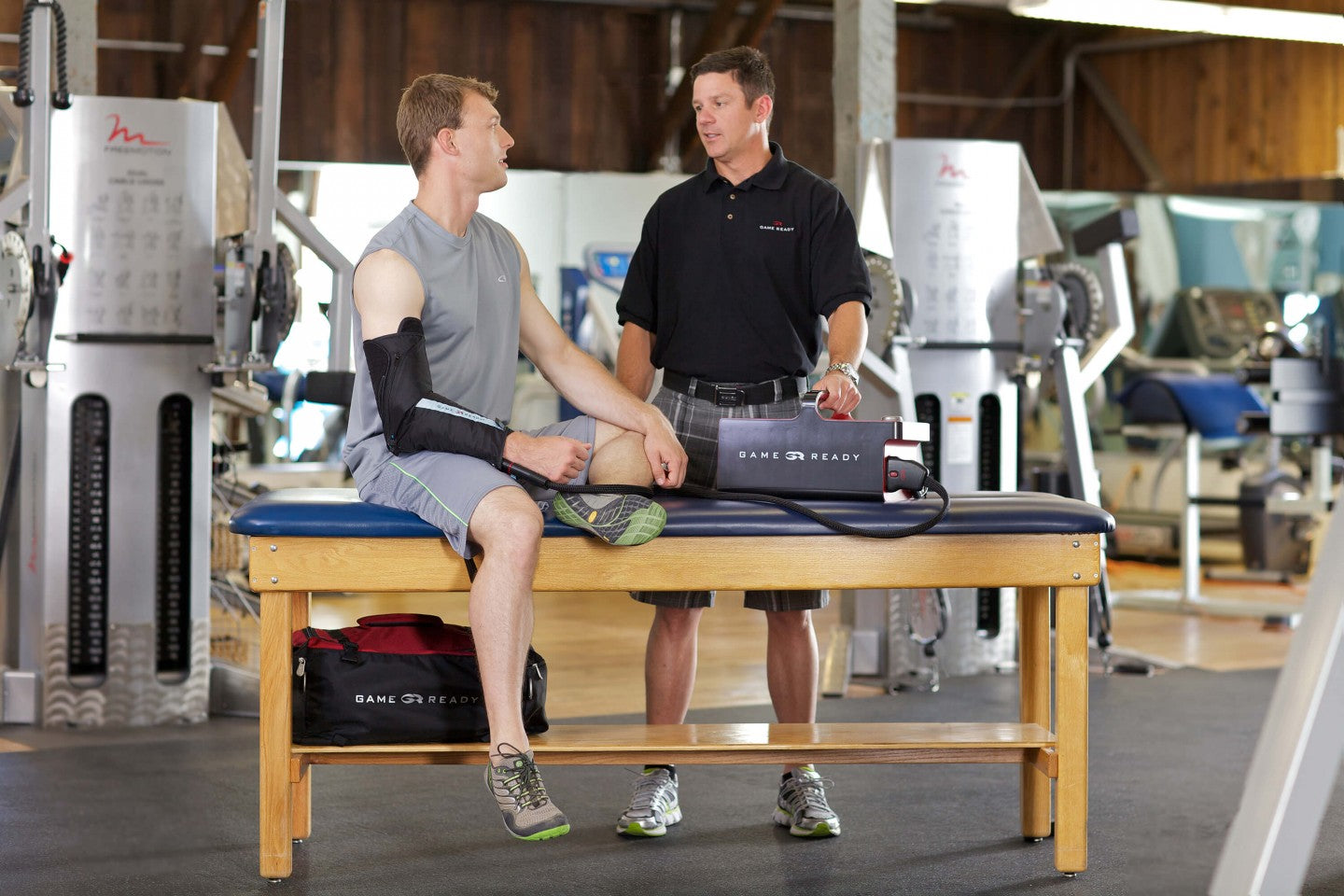
Then ask for a demonstration using the tasks your staff will actually perform. Include setup, fitting, controls, approved cleaning and storage. If a product will leave the clinic with a patient, include patient education and the route for technical questions.
The Game Ready support resources, for example, distinguish control-unit manuals from wrap guides. That is a useful reminder that “we have the manual” may leave a second part of the system unexplained.
Give evidence its own place
Separate a documented operating capability from a demonstrated clinical outcome. A control may offer a particular function without proving that it improves every patient result.
Ask which population, procedure, comparator and outcome support the claim. If the evidence is indirect, note that clearly. A clinic can still assess useful practical advantages while recognising that the clinical question remains uncertain.
This helps prevent a supplier presentation from turning a mechanism, a testimonial and a comparative trial into three interchangeable forms of proof.

Follow the work through the room
Walk through an ordinary appointment. Who selects the accessory? Where does the unit sit? Who assists with fitting? Where are supplies stored? How is equipment prepared between users according to the applicable instructions and clinic procedures?
Include staff who will carry out those tasks. A product that is straightforward for a trained demonstrator may require a different explanation for a new team member.
Record the time and assistance observed. These are implementation findings, not clinical efficacy results. They nevertheless matter when the clinic compares what ownership would require.
Evaluate the relationship after the first purchase
Public clinic feedback can tell a buyer what to investigate. On our rental page, Mike Pameli of Aurora Sports Medicine Professionals describes using several HealFaster products and sharing ideas with our team. That is a relationship example, rather than a controlled result. A prospective clinic can turn it into a useful question: what support and discussion will actually be available after this purchase?
My view is that a supplier should welcome a comparison that includes those responsibilities. If the proposal becomes less persuasive when implementation and service are included, the clinic has learned something important before committing.
Compare the full commitment
The quote should identify the purchase or rental arrangement, included items, consumables, training terms, maintenance information, taxes and applicable transport costs. Record which figures are confirmed and which are estimates.
Also ask what happens if the equipment is unavailable. A clinic should understand the assessment and service process before relying on the device in its schedule. Replacement or loan arrangements need explicit confirmation.
Keep an alternative beside each proposal. That may be the current equipment, a different approach or a decision to delay the purchase. Giving the existing workflow a fair description makes the comparison more honest.
At HealFaster Canada, we represent equipment that needs to fit real clinical environments. The most useful buying conversation is one in which the clinic can explain why an option deserves a place, what work it adds and what would need to be true for the investment to make sense.