How Blood Flow Restriction Training Works and What to Ask Before Starting

Blood flow restriction (BFR) training combines exercise with a cuff applied near the top of an arm or leg. The method can create a training stimulus with lower external loads, but the cuff, individualised pressure and exercise prescription all influence what is being delivered.
The light weight in a demonstration tells only part of the story.
What the cuff changes
During appropriately applied BFR exercise, the cuff restricts blood flow in a controlled way while the muscle works. The exercise and local conditions contribute to the training stimulus; putting on a cuff alone is not the same as completing a BFR training program.
The clinical review in the Journal of Athletic Training discusses BFR as a possible option when conventional loading is limited, with screening and application considerations. That is a reason to consider a specific role in a program, rather than assume the method suits everyone who would prefer lighter weights.
A useful first question is why lower-load training is being considered. An athlete's programming choice and a rehabilitation patient's loading restriction may lead to different assessments and decisions.
Why pressure has to be individualised
Limb occlusion pressure is a reference used to help individualise cuff pressure. It is affected by characteristics such as the limb and cuff. A methodology and safety position stand explains why copying an absolute pressure from another person or a different cuff is unreliable.
The number on a screen therefore needs context. A pressure measurement is part of setting up the method; it is not an independent assessment of whether a person should use BFR.
Ask who will assess suitability, determine the appropriate routine and explain the actual device. Avoid borrowing a setting from a social-media demonstration or judging application by how tight a cuff feels.

Lower load does not mean effortless training
BFR is sometimes presented as a shortcut around the demands of exercise. A more useful explanation is that it changes the way a training stimulus can be created under selected loading conditions.
The person still needs an appropriate exercise, a reason for that exercise and a way to review their response. An appealing claim about light weights should not conceal the need for professional judgment, especially in rehabilitation.
It also helps to name the outcome. A discussion of muscle size, strength or function asks different questions. A study supporting one outcome should not silently be promoted as proof of every other benefit.
What an automated system contributes
SmartCuffs 4.0 is part of HealFaster Canada's SmartTools range. The manufacturer's product information describes integrated controls and limb occlusion pressure measurement. Those capabilities are relevant to an operating discussion.
They do not remove the need to select the person, the exercise or the progression. A product can help deliver an approach while the clinical or training decision remains with a qualified professional.
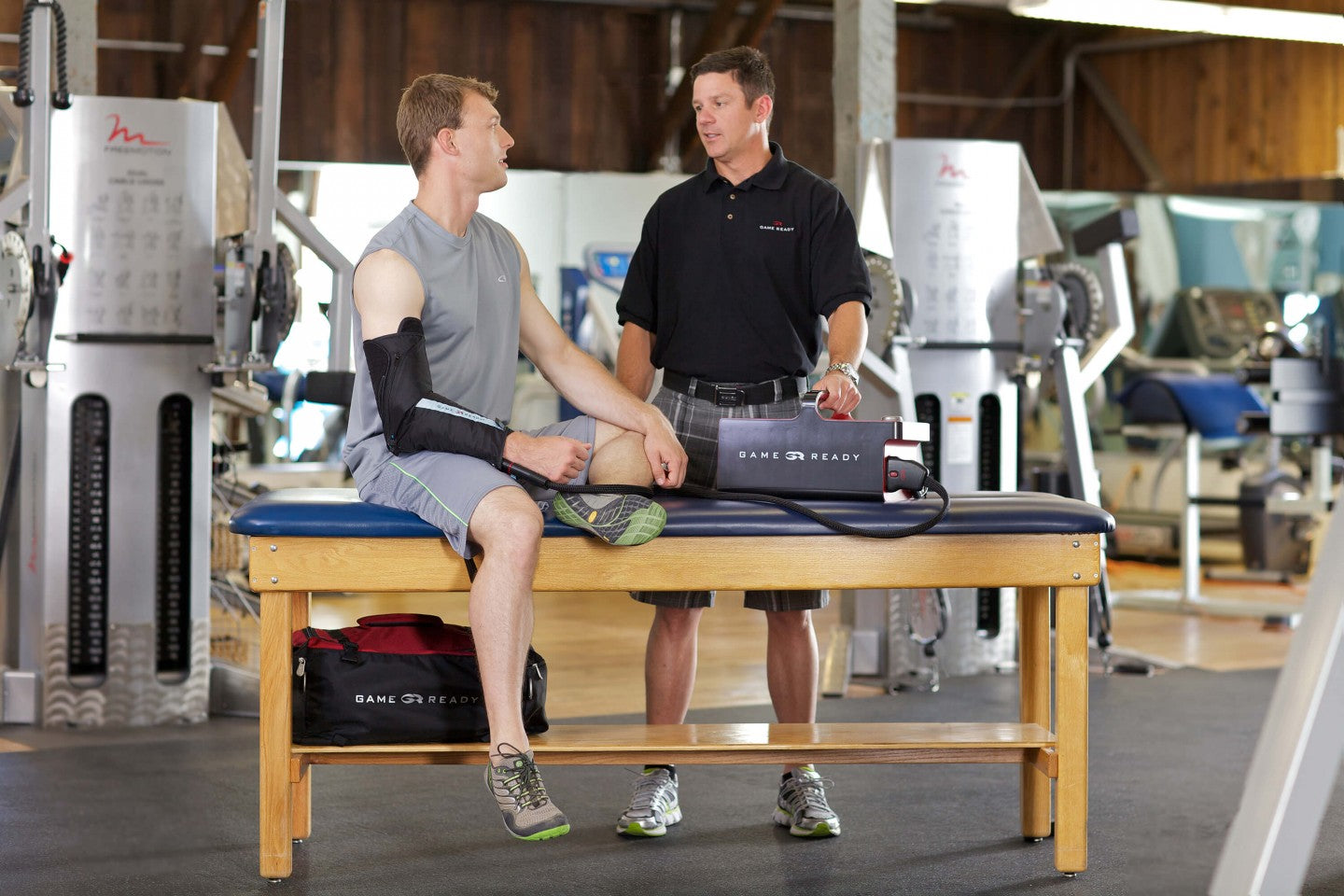
For a demonstration, ask to see how the actual cuff is selected, fitted and operated according to the supplied instructions. If home use is appropriate, establish how the person will receive directions and how concerns will be reviewed.
Questions that make the conversation more useful
Ask what problem BFR is intended to address, why it is appropriate in your circumstances and what outcome will be followed. Ask who owns the exercise prescription and which changes or concerns should prompt contact.
Then discuss the practical demands: fitting the cuff, reaching the controls, keeping the equipment ready and following the agreed routine. A system that looks straightforward on a trained demonstrator may need a different explanation for the actual user.
The value of a BFR discussion lies in that connection between method and purpose. A lower external load can be an important feature of the approach. Its usefulness depends on what the person is being asked to do with it and why.